
Focus on digital signage,touch screen,interactive kiosk,outdoor kiosk.
NO PROJECT IS TOO SMALL FOR OUR EXPERTISE
NO PROJECT IS TOO SMALL FOR OUR EXPERTISE
Let’s be honest for a second—when was the last time you actually stoppedto look at a paper poster taped to a window? Probably never. If you’re a business owner—whether you’re running a chain of burger joints, a cozy bookstore, or a massive shopping mall—you know the struggle. You spend a fortune on graphic design and printing, wait a week for the delivery, and by the time you tape it up, the promotion is already halfway over. And the worst part? Most people just walk right past it.
In 2026, if your "marketing" is static, you’re essentially invisible. The secret to that 30% (or higher) engagement boost everyone is talking about isn't some magic marketing trick. It’s the shift to indoor digital signage displays and the strategic use of the touch kiosk.
If you want to know how the big chains are slashing their labor costs while simultaneously getting customers to spend more per visit, you’re in the right place. We’re going to break down why the "Post-Poster Era" is the best thing that ever happened to your ROI.
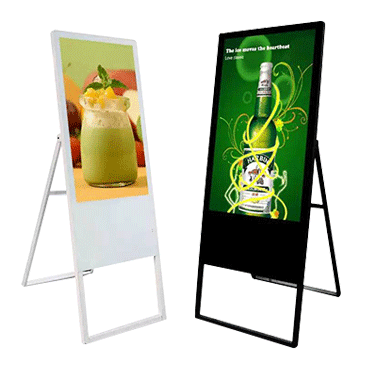
Think about your own behavior. We are hard-wired to notice motion. Back in the day, that meant noticing a predator in the bushes. Today, it means noticing the steam rising from a digital coffee ad or the smooth transition of a 50% off sale on a high-definition screen.
The problem with a printed sign is that it's "dead." It can’t change when the sun goes down. It can’t update when you run out of the "Special of the Day." And let’s talk about the cost—not just the money, but the *time*. If you have 50 locations, changing a poster means 50 managers spending 20 minutes each fumbling with tape and frames. That’s 16 hours of labor just to change a picture.
With indoor digital signage displays, you hit "upload" on your laptop, and boom—every single store in your network is updated in three seconds. But it’s not just about speed. It’s about the psychology of the "Glow." A bright, 4K display in a mall or a cafe acts like a magnet for the human eye. Studies show that digital displays capture 400% more views than static ones. If you aren't using them, you’re leaving eyes—and money—on the table.
I don't need to tell you that finding good staff in 2026 is a nightmare. Minimum wages are up, turnover is high, and your team is burnt out. This is where the touch kiosk steps in.
A touch kiosk (or a Self Service Kiosk) isn't there to replace your staff; it’s there to free them up. Instead of having your best barista stuck behind a cash register saying "That'll be $5.50" a thousand times a day, the kiosk handles the transaction.
Zero Errors: The customer taps exactly what they want. No more "I said NO onions!" complaints.
The Infinite Upsell: A human might forget to ask, "Would you like a croissant with that?" A kiosk neverforgets. In fact, kiosks are so good at upselling that average order values usually jump by 20% the week they are installed.
Faster Throughput: In a busy burger joint or coffee shop, the "Morning Rush" is the enemy. A line of four kiosks can process 10 times the orders of a single cashier.
Let's look at how this actually plays out on the ground. It’s not a "one-size-fits-all" situation.
For a burger chain, the menu is your most powerful weapon. With digital menu boards (a key part of your indoor digital signage strategy), you can use "Day-parting."
8:00 AM: The screen shows breakfast burritos and hot coffee.
11:30 AM: It automatically switches to the Big Burger Combo.
2:00 PM: It highlights milkshakes and snacks for the afternoon slump.
You’re showing the right food at the right time. That’s how you get that 30% engagement boost.
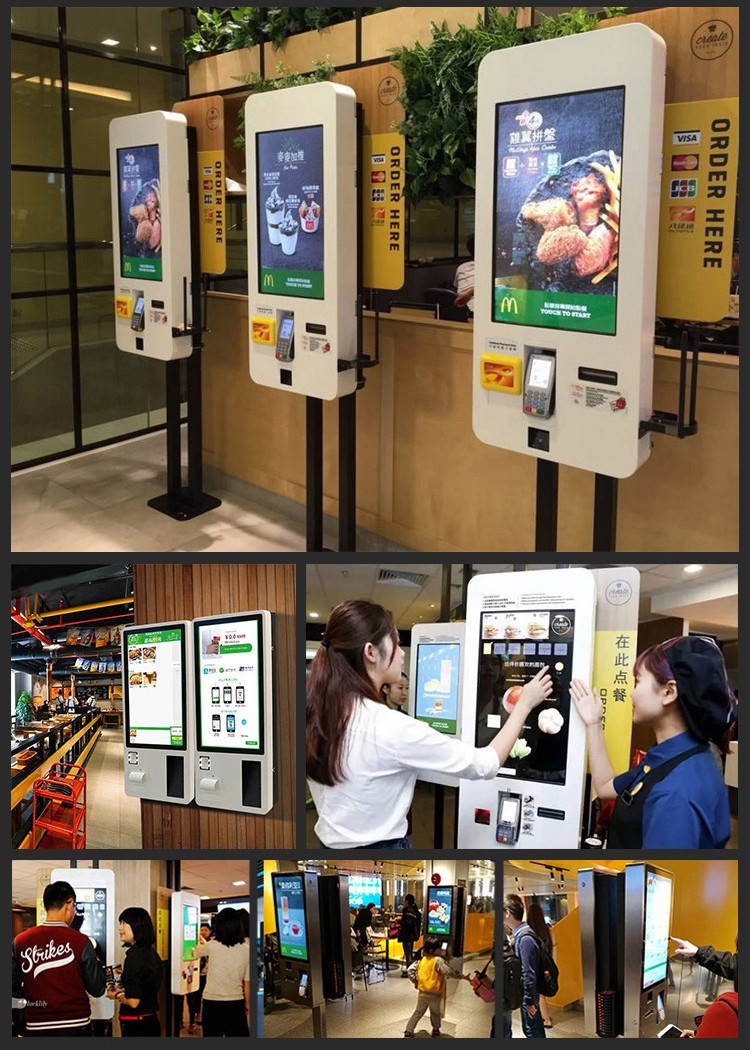
If you’re a mall manager, indoor digital signage displays are your new best friend for a different reason: Ad Revenue. You can sell "Digital Airtime" to your tenants.
Imagine a 75-inch high-brightness screen at the mall entrance. Zara pays you to show their new collection for 10 seconds every minute. Then Nike. Then a local car dealership. You aren't just a mall owner anymore; you’re a media mogul. Plus, adding an interactive wayfinding kiosk means shoppers can find their way to those stores without getting frustrated and leaving early.
In a cafe, it’s all about the "Vibe." You can use indoor digital signage displays to show "behind-the-scenes" videos of beans roasting or bread baking. It builds a story. Then, use a small, sleek touch kiosk at the counter for "Grab and Go" orders. Your regulars will love skipping the line, and your baristas can focus on the art of the latte.
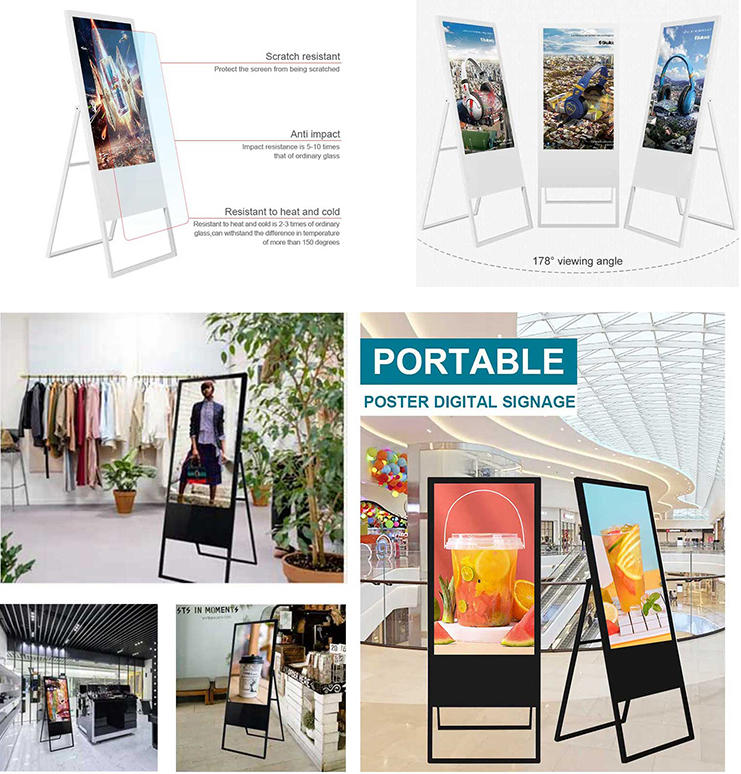
I know, I know—specs are boring. But if you’re the one signing the check, you need to know what you’re buying. In 2026, don't settle for "Cheap."
Brightness (Nits): Indoor screens need to be bright enough to fight the mall lighting. Look for at least 500-700 nits. If the screen is near a window, you might need even more.
Touch Tech: Always go for PCAP (Projected Capacitive). It’s the same tech as your iPhone. It’s smooth, fast, and doesn’t break when someone taps it too hard.
CMS (Content Management System): This is the "brain." You want a cloud-based CMS so you can manage your screens from your phone while you’re on vacation (or just at home).
SOC (System on Chip): Most modern indoor digital signage displays have the computer built right into the screen. No more messy cables or external "media player" boxes hiding behind the TV.
To make your life easier, here’s a quick list of what’s actually working in the field right now.
Rank | Solution Type | Best For | The "Killer" Feature
1 | Ultra-Thin Video Walls | Shopping Malls | Seamless "OLED" looks that stop people in their tracks.
2 | Slim-Pedestal Touch Kiosk | Burger & Pizza Chains | Small footprint, built-in receipt printer, and NFC pay.
3 | Stretched Display Bars | Coffee Shops / Bakeries | Perfect for "narrow" spaces above the counter.
4 | Double-Sided Window Displays | Apparel & Shoe Stores | One side faces the street, one side faces the store.
5 | AI-Interactive Totems | Tourist Sites / Large Venues | Uses AI to "guess" the user's language and offer help.
Let's look at a "Real-ish" example. A chain of 15 bookstores was struggling with the "Amazon Effect." People would come in, browse, and then buy online.
The Fix: They installed indoor digital signage displays throughout the aisles and a central touch kiosk "Discovery Station."
The screens showed "Trending on TikTok" book trailers.
The touch kiosk allowed customers to scan a book and see real-time reviews, similar titles, and even "Staff Picks."
If a book wasn't in stock, the customer could order it at the kiosk for home delivery.
The Result: Foot traffic stayed the same, but *conversion(people actually buying stuff) went up by 25%. Why? Because the digital experience felt as "easy" as shopping online, but with the instant gratification of a physical store.
If you just hang a screen and play a 10-minute video of your logo, you’re wasting your money. To get that 30% engagement, you need to be smart.
1. Motion is Mandatory: Our eyes don't care about static images. Use 5-10 second clips.
2. Call to Action (CTA): Every screen should tell the customer to *dosomething. "Scan here for 10% off," or "Tap to order the Summer Special."
3. Location, Location, Location: A touch kiosk hidden in the back of the store is a paperweight. Put it where the "bottleneck" is.
4. Keep it Fresh: If a customer comes in once a week and sees the same ad, they will stop looking at your screens. Update your content every few days.
In the next couple of years, indoor digital signage displays are going to get even creepier (in a good way). We’re talking about "Anonymized Audience Analytics." The camera on the kiosk can see that a group of three teenagers is standing in front of it and automatically switch the ad from "Retirement Savings" to "Latest Sneaker Drops."
This isn't sci-fi; it’s 2026. If you’re a chain owner, this level of personalization is how you win the war for attention.
The truth is, your customers are already living in a digital world. When they walk into your cafe or mall and see a faded paper poster, it feels like they’re stepping back in time. And "old" usually feels "expensive" or "out of touch."
By investing in indoor digital signage displays and the right touch kiosk setup, you’re telling your customers that you value their time and their experience. You're cutting down on the friction of ordering, you're boosting your average ticket size, and you're making your branding consistent across every single location you own.
Ready to ditch the paper? Would you like me to help you draft a Request for Proposal (RFP) for your kiosk vendors?
Should we look at the specific energy-saving specs for these displays to keep your utility bills down?
The secret is out. 30% higher engagement is just one screen away. Let's make it happen.We are a manufacturer of indoor digital signage displays. Welcome to inquire about wholesale prices and customized indoor digital signage displays or outdoor digital signage.
Current article link: https://www.lcdkiosk.com/news/1496.html
Tel
